Ge He Sensor Dry Dryer Manual: A Comprehensive Guide
This manual provides detailed instructions for GE dryers, covering installation, operation, troubleshooting, and maintenance. It supports models 333, 453, 463, 483, 485, 2000, 3300, and 4500 series.
Understanding Your GE Dryer Model
Your GE dryer is a sophisticated appliance designed for efficient and reliable clothes drying. Familiarizing yourself with its specific features and capabilities is crucial for optimal performance. Features and appearance may vary between models, but the core principles of operation remain consistent across the 333, 453, 463, 483, 485, 2000, 3300, and 4500 series.
Locating the model number – typically found on a label behind the dryer door – is the first step in accessing relevant documentation and support. This number (like 500A277P033) identifies your exact model and unlocks access to specific manuals and troubleshooting guides. Understanding your dryer’s capacity (e.g., GTD58EBSVWS boasts 7.4 cu. ft.) helps determine appropriate load sizes. Remember drying times are affected by heat type, load size, fabric type, and duct condition.
Locating the Model Number (500A277P033 & Others)
Identifying your GE dryer’s model number is essential for accessing specific support resources, including this manual and parts diagrams. The model number, such as 500A277P033, uniquely identifies your appliance and ensures you receive accurate information. This number is typically located on a label affixed to the dryer.
To find the label, open the dryer door and look along the door frame or the inside of the cabinet. The label will contain the model number, serial number, and other important specifications. Having this information readily available will streamline any troubleshooting or service requests. Remember that features and appearance may vary from your model, so the correct model number is vital. Accurate identification ensures compatibility with any replacement parts or recommended procedures.
Dryer Types Supported: 333, 453, 463, 483, 485, 2000, 3300, 4500 Series
This comprehensive guide applies to a wide range of GE dryer series, ensuring broad compatibility for users. Specifically, it supports models within the 333, 453, 463, 483, and 485 series, as well as the 2000, 3300, and 4500 series. These series encompass various GE electric and gas dryers equipped with Sensor Dry technology.
While the core principles outlined in this manual remain consistent across these series, minor variations in features and appearance may exist. Drying times can vary based on heat type (electric, natural gas, or LP gas), load size, fabric types, wetness of clothes, and the condition of exhaust ducts. Always refer to the specific model number label for precise details related to your appliance. This ensures optimal performance and safety.
Sensor Dry Technology Explained
GE’s Sensor Dry utilizes advanced moisture sensors to detect when clothes are truly dry, preventing over-drying and saving energy for optimal fabric care.
How Moisture Sensors Work
GE dryers equipped with Sensor Dry technology employ sophisticated moisture sensors located within the dryer drum. These sensors aren’t simply detecting temperature; they actively measure the humidity level of the air passing through the dryer. As clothes tumble and release moisture, the sensors continuously monitor this humidity.
The system works by sending a small electrical current through the sensor grid. Wet fabrics impede this current more than dry fabrics. The dryer’s control board interprets the changes in electrical resistance, accurately determining the moisture content of the load.
This data is then used to automatically adjust the drying time, ensuring clothes are dried to the selected dryness level – more dry, medium dry, or less dry – without wasting energy on unnecessary drying cycles. This intelligent system adapts to varying load sizes and fabric types, providing consistently excellent results.
Benefits of Sensor Drying
Sensor Dry technology offers numerous advantages over traditional timed drying methods. Primarily, it prevents over-drying, which can damage fabrics and cause shrinkage. By precisely detecting moisture levels, the dryer automatically stops when clothes reach the desired dryness, preserving their quality and extending their lifespan.
Furthermore, sensor drying significantly enhances energy efficiency. Unlike timed cycles that run for a predetermined duration regardless of moisture content, Sensor Dry only operates until the load is dry, reducing energy consumption and lowering utility bills.
This feature also provides convenience, eliminating the guesswork of selecting the appropriate drying time. It adapts to load size, fabric type, and initial wetness, delivering optimal results every time. Ultimately, Sensor Dry offers superior fabric care, energy savings, and user convenience.
Factors Affecting Drying Time (Heat Type, Load Size, Fabric Type, Duct Condition)
Several factors influence dryer performance and cycle times, even with Sensor Dry technology. The type of heat – electric, natural gas, or LP gas – impacts drying speed, with gas generally offering faster results. Load size is crucial; overloading restricts airflow, extending drying time, while smaller loads dry quicker.
Fabric type also plays a significant role. Heavy materials like denim require longer cycles than lightweight synthetics. Moreover, the wetness of clothes after washing directly affects drying duration. Critically, the condition of exhaust ducts is paramount.
Restricted or kinked ducts impede airflow, leading to prolonged drying times and potential overheating. Regular inspection and cleaning of ducts are essential for optimal performance and safety. Ignoring these factors can compromise the efficiency of your GE dryer and potentially damage your clothes.

Installation Guide (GTD58EBSVWS & Similar Models)
Proper installation is vital for optimal performance. This guide details dimensions, electrical connections, and crucial dryer exhausting best practices for models like GTD58EBSVWS.
Dimensions and Space Requirements
Before installing your GE dryer, carefully review the required dimensions to ensure a proper fit within your laundry space. Adequate space is crucial for both safe operation and efficient maintenance; Typically, these dryers require a minimum width of 27 inches, allowing for sufficient airflow around the unit. Depth usually ranges around 30 inches, including the rear connections for venting and electrical supply.
Height considerations are also important, generally around 43-44 inches, providing accessibility for loading and unloading clothes. Allow at least 6 inches of clearance behind the dryer for the exhaust duct and electrical connections, preventing kinking or damage. Side clearances of 1 inch are recommended for ventilation.

Furthermore, consider door swing and ensure enough space for comfortable access. Refer to the specific model’s installation guide (like for GTD58EBSVWS) for precise measurements, as slight variations may exist between different series and capacities. Ignoring these requirements can lead to operational issues or even safety hazards.
Electrical Connection Requirements
Proper electrical connection is paramount for the safe and efficient operation of your GE dryer. These dryers typically require a dedicated 240-volt, 60Hz electrical circuit. A three-prong grounding plug is essential for safety, preventing electrical shock. Do not under any circumstances alter or remove the grounding prong.
The recommended amperage varies depending on the model, but generally falls between 30 and 50 amps. Consult the dryer’s model number label (e.g., 500A277P033) and the installation guide (like GTD58EBSVWS) to confirm the specific requirement for your unit. Using an incorrectly sized circuit breaker can lead to overheating and potential fire hazards.
It is strongly advised to have a qualified electrician perform the electrical connection. Improper wiring can damage the dryer and void the warranty. Ensure the electrical outlet is easily accessible for disconnection in case of emergencies or maintenance. Always follow local electrical codes and regulations.
Dryer Exhausting Information & Best Practices
Proper dryer venting is crucial for performance and safety. Exhaust ducts must be rigid metal or flexible metal ducting – plastic or foil ducts are prohibited due to fire risk. The shortest, straightest path possible is ideal, minimizing bends and length to improve airflow.
Avoid crushing or kinking the exhaust duct, as this restricts airflow and increases drying time. Regularly inspect and clean the entire exhaust system, including the ductwork, to remove lint buildup. Lint accumulation is a significant fire hazard and reduces dryer efficiency.
The exhaust duct should terminate to the outside with a proper vent cap, preventing birds and pests from nesting inside. Ensure the vent cap isn’t obstructed by snow, leaves, or other debris. Refer to the GTD58EBSVWS installation guide for specific venting recommendations and maximum duct lengths for optimal performance.

Operating Your GE Dryer
Familiarize yourself with the control panel and cycle selections for optimal use. The sensor dry feature automatically detects moisture levels for efficient drying.
Understanding the Control Panel
The GE dryer control panel is designed for intuitive operation, though features may vary slightly between models. Typically, you’ll find a cycle selector dial allowing you to choose pre-programmed drying cycles like Normal, Delicate, or Heavy Duty.
Sensor Dry options are prominently displayed, often with settings for moisture level – for example, ‘More Dry’, ‘Medium Dry’, and ‘Less Dry’. These utilize sensors to halt the cycle when the desired dryness is achieved.
Additional controls include temperature settings (High, Medium, Low, Air Dry), start/pause buttons, and options for features like Wrinkle Care or Sanitize. Digital displays show cycle time remaining and selected settings. Locating your model number, often behind the dryer door, allows access to a specific manual detailing your panel’s unique functions.
Cycle Selection Guide
GE dryers offer a variety of cycles to cater to different fabric types and drying needs. The ‘Normal’ cycle is ideal for everyday cottons and linens. ‘Delicate’ provides gentle heat for lingerie, silks, and other sensitive items. ‘Heavy Duty’ is designed for bulky items like towels and jeans, utilizing higher heat and longer drying times.
Sensor Dry cycles automatically adjust drying time based on moisture levels. ‘More Dry’ is suitable for items you want thoroughly dried, while ‘Less Dry’ leaves a slight dampness for ironing.
Specialty cycles include ‘Sanitize’ for eliminating bacteria, and ‘Wrinkle Care’ to minimize creases. Always consult the garment’s care label before selecting a cycle. Remember, drying times vary based on load size, fabric type, and exhaust duct condition.
Using the Sensor Dry Feature Effectively
The Sensor Dry feature optimizes drying by detecting moisture levels within the load, preventing over-drying and saving energy. For best results, avoid overloading the dryer; proper air circulation is crucial for accurate moisture sensing. Ensure the lint filter is clean before each use, as a clogged filter restricts airflow and impacts sensor performance.
Select the appropriate sensor level – ‘More Dry’, ‘Medium’, or ‘Less Dry’ – based on your desired dryness. ‘More Dry’ is ideal for items needing thorough drying, while ‘Less Dry’ leaves slight dampness for ironing.
Remember that factors like fabric type, load size, and exhaust duct condition influence drying time. Regularly inspect and clean exhaust ducts to maintain optimal airflow and sensor accuracy. This feature provides convenience and protects your clothes!

Troubleshooting Common Issues
This section addresses frequent problems like the dryer not starting, clothes remaining damp, or excessively long drying cycles, offering solutions for optimal performance.
Dryer Not Starting
If your GE dryer fails to start, begin by verifying the power supply. Ensure the dryer is properly plugged into a functioning electrical outlet and that the circuit breaker hasn’t tripped. Check the door switch; the dryer won’t operate if the door isn’t securely closed. A faulty door switch is a common culprit.
Next, examine the thermal fuse, a safety device that can blow if the dryer overheats. A blown thermal fuse will prevent the dryer from starting. Accessing and replacing this fuse often requires disassembly and should be done cautiously. Also, inspect the drive belt for breaks or looseness; a damaged belt will prevent the drum from turning, giving the impression the dryer isn’t starting.
Finally, consider the timer or electronic control board. A malfunctioning timer or control board can disrupt the starting sequence. If these initial checks don’t resolve the issue, professional service may be necessary to diagnose and repair more complex electrical components.
Clothes Not Drying Completely
If clothes remain damp after a drying cycle, several factors could be at play. First, verify the lint filter is clean; a clogged filter restricts airflow, hindering drying performance. Ensure the exhaust duct isn’t kinked or blocked, as restricted venting significantly impacts drying efficiency. Inspect the entire length of the ductwork for lint buildup.
Overloading the dryer can also lead to incomplete drying. Smaller loads allow for better air circulation. Consider the selected cycle; using a sensor dry setting relies on accurate moisture detection, which can be affected by fabric type or load size. Ensure the appropriate cycle is chosen.
Finally, check the heating element (for electric dryers) or gas valve (for gas dryers). A malfunctioning heating element or gas valve won’t generate sufficient heat for effective drying. Professional diagnosis and repair are recommended for these components.
Excessive Drying Times
Prolonged drying cycles often indicate airflow restrictions. Begin by thoroughly cleaning the lint filter before each load – a clogged filter is a common culprit. Next, inspect the entire dryer exhaust duct system. Kinks, crushes, or excessive length impede airflow, extending drying times. Remove any lint accumulation within the ductwork; professional cleaning is advisable.
The type of heat source (electric, natural gas, or LP gas) influences drying speed. Ensure the correct fuel type is selected if applicable. Load size also matters; overloading restricts air circulation. Wetness of clothes entering the dryer significantly impacts cycle length – larger amounts of water require more time.
Finally, consider the condition of the exhaust duct. Poorly insulated ducts can lose heat, increasing drying time. Verify proper ventilation to the outside.
Maintenance and Care
Regular cleaning ensures optimal performance and longevity. This includes the lint filter, dryer drum, and exhaust ducts, preventing fire hazards and maintaining efficiency.
Cleaning the Lint Filter
Maintaining a clean lint filter is crucial for safe and efficient dryer operation. After every load, remove the lint filter – typically located inside the dryer drum near the door – and clean it thoroughly. Simply pull the filter straight up and use your fingers to gently remove the accumulated lint.
For optimal results, occasionally wash the lint filter with mild detergent and warm water. This removes any buildup from fabric softeners or dryer sheets that can clog the filter’s pores, reducing airflow. Ensure the filter is completely dry before reinstalling it.
A clogged lint filter restricts airflow, leading to longer drying times, increased energy consumption, and potentially a fire hazard. Regularly cleaning the lint filter not only improves drying performance but also contributes to the overall safety of your home. Ignoring this simple maintenance task can have significant consequences.
Cleaning the Dryer Drum
Regularly cleaning the dryer drum helps maintain optimal performance and prevents the transfer of residue to your clothes. To clean, simply wipe down the interior of the drum with a damp cloth. For stubborn stains or buildup, create a solution of warm water and mild detergent.
Avoid using abrasive cleaners, as these can damage the drum’s finish. After applying the cleaning solution, wipe the drum thoroughly with a clean, damp cloth, and then dry it with a soft towel. Pay particular attention to areas where detergent or fabric softener residue may accumulate.
Periodically, you can also run an empty dryer cycle with a few clean, damp cloths to help loosen and remove any remaining residue. This ensures a fresh, clean environment for your laundry, contributing to better drying results and extending the life of your GE dryer.
Inspecting and Cleaning Exhaust Ducts
Maintaining clear exhaust ducts is crucial for dryer efficiency and safety. Restricted airflow significantly increases drying times and poses a fire hazard. Inspect the entire duct system at least annually, or more frequently if you notice longer drying cycles.
Disconnect the duct from both the dryer and the wall outlet. Use a vacuum cleaner with a long hose attachment to remove lint buildup from inside the ducts. For rigid metal ducts, a specialized duct cleaning brush can be very effective. Flexible plastic or foil ducts should be replaced rather than cleaned, as they trap lint easily.
Ensure all connections are secure and free of kinks or obstructions. Proper venting is essential; consult local building codes for requirements. A clean exhaust system improves dryer performance, reduces energy consumption, and minimizes the risk of fire.

Service Manual Overview & Resources
Access the GE dryer service manual in PDF format for detailed electrical engineering information and manufactured goods specifics, aiding in comprehensive repairs and understanding.
Accessing the GE Dryer Service Manual (PDF)
Obtaining the GE dryer service manual in PDF format is crucial for qualified technicians and experienced DIYers undertaking complex repairs. This comprehensive document details the dryer’s internal components, wiring diagrams, and diagnostic procedures. It’s an invaluable resource for understanding the intricacies of GE dryer models, including those utilizing Sensor Dry technology.
While a direct link isn’t consistently provided by GE, searching online using specific keywords like “GE dryer service manual PDF” along with your dryer’s model number (e.g., GTD58EBSVWS) will often yield results. Be cautious when downloading from unofficial sources to ensure the file is safe and authentic. The manual covers electrical engineering aspects and manufactured goods information, offering a deep dive into the appliance’s functionality. Remember to prioritize safety and disconnect power before attempting any repairs.
Electrical Engineering Aspects
The electrical system within a GE Sensor Dry dryer is a complex network powering various components, including the heating element, motor, control board, and sensors. Understanding these aspects is vital for safe and effective troubleshooting. The dryer operates on standard household voltage, typically 240V, requiring a dedicated circuit for optimal performance and safety.
The control board utilizes sophisticated circuitry to interpret sensor data – specifically, moisture levels – and adjust drying cycles accordingly. Wiring diagrams within the service manual detail the connections between these components, aiding in identifying faults. Proper grounding is essential to prevent electrical hazards. Technicians must possess a strong understanding of electrical safety protocols and utilize appropriate testing equipment when diagnosing electrical issues within these GE appliances.
Manufactured Goods Information
GE Appliances manufactures these Sensor Dry dryers with a focus on durability and performance, utilizing a range of materials including steel for the cabinet, and specialized polymers for internal components. Production involves rigorous quality control checks at each stage, from component sourcing to final assembly. The dryers are designed for residential use and adhere to strict safety standards.
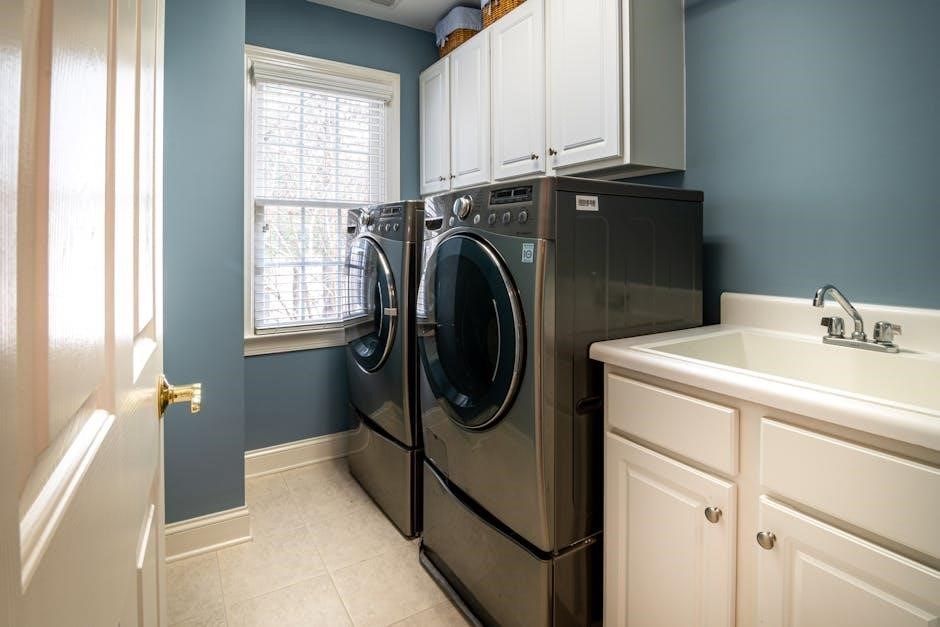
Component sourcing is global, with parts originating from various suppliers. GE maintains detailed records of manufacturing dates, batch numbers, and material specifications for each unit. This information is crucial for warranty claims and identifying potential recalls. The service manual provides access to parts lists and exploded diagrams, facilitating repairs and replacements. Understanding the manufacturing process aids technicians in diagnosing issues related to material defects or assembly errors.